|
Researchers say the discovery, located in Jerusalem’s City of David, is one of its kind since at the time when the Hebrew king ruled over Judah, such honor monuments were considered unacceptable. 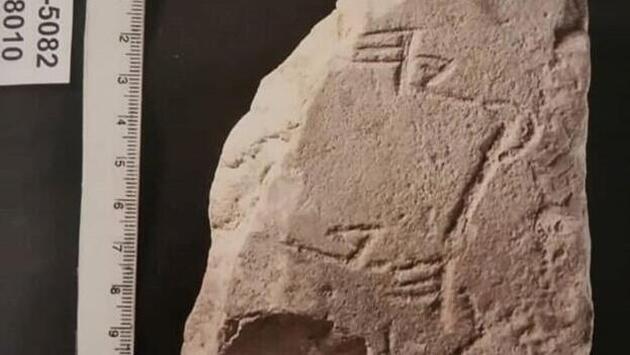 Hezekiah inscription in Jerusalem (Photo: Vladimir Neichin, Elad foundation) The biblical king’s name was found partially written into the inscription, and the fragment could be filled in to read a specific part in the bible referring to Hezekiah. The inscription, written on a stone tablet, was found over a decade ago during archeological digs near the site of the City of David National Park in 2007, headed by Eli Shukron and Ronnie Reich. The study on the dig’s findings were published in 2008, but had no mention of the biblical figure. The inscription was found near a manmade water pool within a refuse pile filled with earthenware dated to the 8th century BC, as well as dirt and stones. The inscription was written on a limestone tablet measuring 13.5cm long and 9.5cm wide. “It’s a very important discovery, which changes the course of the research because it was believed Hebrew kings never erected monuments in their honor, unlike other ancient eastern cultures,” Prof. Galil said. “Jewish kings were mentioned in monuments of other cultures, like in Assyrian, Babylonian and Aramaic texts – but this is the first time where a monumental Hebrew text mentions the achievements of a king." Eli Shukron, who was in charge of the archeological dig, said: “The Hezekiah inscription boosts the assumption that other ancient inscriptions found in Jerusalem were written during the days of, and mentioned, the king - including other inscriptions found in the City of David National Park.” Thanks to Y Net News
May this [ivory] tusk root out the lice of the hair and the beard’ is the first sentence written in the Canaanite language to be discovered at Tel Lachish. 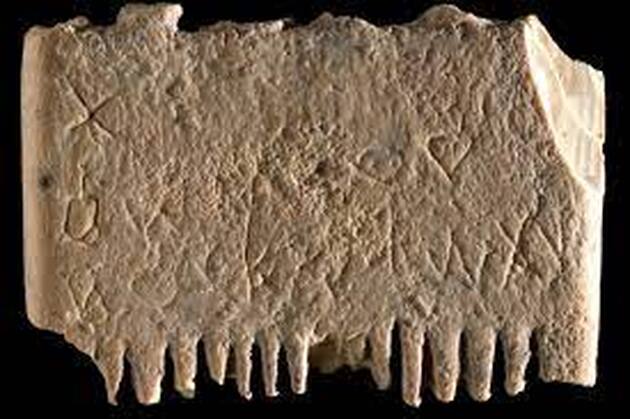 The ivory comb. (photo credit: DAFNA GAZIT/ISRAEL ANTIQUITIES AUTHORITY) Ancient Canaanites suffered from lice, pediculus humanus capitis, on their beards and not just on their heads as do young children in Israeli schools today. The first sentence ever written in their language from 1700 BCE appears on an ivory comb inscribed with a hopeful plea to wipe out the lice: “May this [ivory] tusk root out the lice of the hair and the beard.” The alphabet was invented around a century before and was used by the Canaanites and later included in most other languages in the world. Until recently, no meaningful Canaanite inscriptions had been discovered in the Land of Israel, except for two or three words here and there. The comb was dug up at Israel’s Tel Lachish by a team from the Hebrew University of Jerusalem (HU) and Southern Adventist University in Tennessee under the direction of professors Yosef Garfinkel, Michael Hasel and Martin Klingbeil. The inscription was deciphered by semitic epigraphist Dr. Daniel Vainstub at Ben-Gurion University of the Negev (BGU) in Beersheba. The ivory was tested by HU Prof. Rivka Rabinovich and BGU Prof. Yuval Goren and found to originate from an elephant tusk. Thanks to jpost.com/archaeology
|
Shofar BlogLocutores - Videos Musicales Está escuchando a
Radio Shofar

Archivos
Junio 2023
Categorias |